
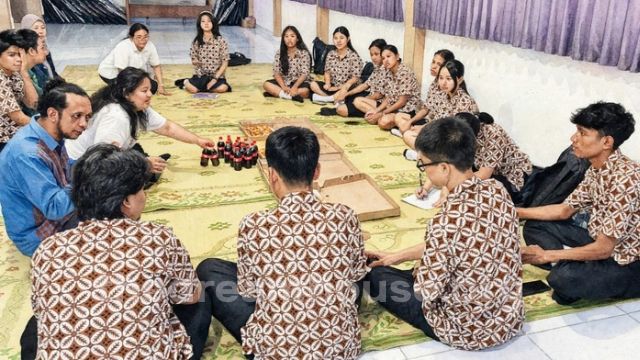
Yogyakarta, November 18, 2026 — Protecting children is not only the responsibility of parents, teachers, or child protection organizations. Children and young people also have an important role to play in creating safe, welcoming, and violence-free environments. This is the awareness that Yayasan Rumah Impian Indonesia (Dreamhouse Foundation) continues to promote through its School Child Protection Leaders program.
On Wednesday, November 18, 2026, Dreamhouse Foundation held its final meeting with 15 Child Protection Leaders at SMK BOPKRI 1 Yogyakarta, Indonesia. These students had previously been officially appointed as school child protection leaders during Dreamhouse Foundation’s 20th anniversary celebration on November 7, 2026.
The meeting provided an opportunity to strengthen their understanding of children’s rights, different forms of violence, and the practical roles they can play in helping protect their peers within the school environment.
Child Protection Leaders: From Friends, For Friends, Together
The session featured Yosua Lapudooh as the speaker, delivering a presentation entitled “Child Protection Leaders: Dare to Care, Dare to Protect.”
The presentation emphasized that young people have the ability to recognize problems, demonstrate care, and encourage positive change within their own communities. Peers are often the first to notice when someone is experiencing difficulties. Therefore, having student child protection leaders in schools can be an important step toward building a culture of mutual care and protection.
Child Protection Leaders were introduced as individuals equipped with basic knowledge and skills to help protect children from violence, abuse, and neglect. They have three important roles: educators who introduce children’s rights, caring friends who listen and provide support, and agents of change who encourage safer school environments.
However, one important message was made clear: student leaders do not need to become experts or handle cases of violence themselves. Their role is to be caring friends who know when and how to seek help.
Understanding the Four Fundamental Rights of Children
An important part of the session focused on understanding the four fundamental rights of every child. All children are entitled to these rights without discrimination:
- The Right to Life and Development. Every child has the right to nutritious food, adequate housing, and healthcare to support healthy growth and development.
- The Right to Education. Every child deserves equal opportunities to learn in a safe and welcoming educational environment.
- The Right to Protection. Every child has the right to be protected from violence, neglect, exploitation, and other forms of harm.
- The Right to Participation. Every child has the right to be heard and involved in decisions that affect their lives.
In the school environment, the right to protection is particularly important. Bullying, intimidation, social exclusion, and other forms of violence can undermine children’s sense of safety and negatively affect their development.
Respecting children’s rights begins with everyday actions. Students were encouraged not to mock, exclude, threaten, or hurt others. They were also reminded to respect differences, give everyone an opportunity to speak, and support friends who may need help.
Recognizing Signs of Violence and Becoming a Safe Friend
Another important topic was learning how to recognize possible signs of violence experienced by peers. These signs may appear in physical, emotional, or social changes.
Changes in behavior, such as withdrawing from others, appearing frequently sad, becoming unusually aggressive, avoiding friends, frequently missing school, or losing interest in learning, may indicate that someone needs attention and support. Unexplained bruises, unusual injuries, or repeated physical injuries should also be taken seriously.
However, a single sign does not necessarily prove that a child is experiencing violence. Student leaders were reminded not to jump to conclusions. Instead, they should remain attentive to changes in their friends’ behavior and seek appropriate assistance when necessary.
When a friend begins sharing a difficult or painful experience, student leaders were encouraged to follow four simple steps:
- Listen. Give your full attention and remain calm and empathetic.
- Believe and respect. Avoid blaming or judging the person who is sharing their experience.
- Ask what they need. Find out what kind of support would be helpful at that moment.
- Seek help. Connect the person with a trusted adult who can provide appropriate assistance.
One simple but meaningful expression of support is: “Thank you for trusting me and sharing your story.”
At the same time, student leaders must understand the boundaries of their responsibilities. They should not investigate incidents themselves, confront perpetrators alone, pressure friends to share information, or attempt to handle cases without assistance. Respecting privacy and connecting friends with trusted adults are essential parts of their role.
Six Steps to Becoming a Child Protection Leader
To help students understand their responsibilities in practical terms, the presentation outlined six steps for becoming effective Child Protection Leaders:
- Listen with empathy. Give attention to friends who need support.
- Do not judge. Avoid blaming or dismissing another person’s experiences.
- Inform a trusted adult. Do not keep information about suspected violence to yourself.
- Seek assistance. Connect friends with appropriate counseling, medical, or child protection services.
- Take an active role. Participate in activities and promote positive practices within the school community.
- Maintain boundaries. Understand that cases of violence require support from qualified and authorized professionals.
Students were also introduced to available reporting channels, including school counselors, homeroom teachers, trusted teachers, and relevant child protection services. When someone’s safety is at risk, seeking help should never be delayed.
Through these practical steps, student leaders are expected to become part of the initial support system for their peers without taking on responsibilities that belong to professionals.
Building Safer Schools Begins with Caring
This final meeting served as a reminder that creating safe and child-friendly schools requires more than rules and policies against bullying. It takes shared awareness, genuine concern, and the courage to act when something is wrong.
At the end of the presentation, student leaders were invited to make a personal commitment: to respect every child’s rights, reject violence and bullying, listen to friends with empathy, seek help when necessary, and contribute to creating a safe environment for everyone.
Dreamhouse Foundation hopes that the Child Protection Leaders at SMK BOPKRI 1 Yogyakarta will carry this spirit into their everyday lives. The goal is not simply for students to understand what they have learned, but to put these principles into practice through small, meaningful actions among their peers.
Every child deserves to feel safe. Child protection is not the responsibility of one person alone. We can begin with ourselves, with our friends, and with our schools.
Dare to Care. Dare to Protect.