There is a simple question that we often overlook: what does a child truly need to grow fully and meaningfully?
Some of us may answer: adequate food, access to education, or a safe environment. All of these are true. Yet beneath these visible needs lies something more fundamental—something that becomes the foundation of them all: child rights.
Child rights are not merely legal concepts or terms found in international conventions. They are a recognition that every child, without exception, possesses dignity, value, and a future worth fighting for.
At Yayasan Rumah Impian Indonesia, this understanding is not only a conceptual foundation—it is the very breath that shapes every form of care, intervention, and accompaniment.
Understanding Child Rights: More Than Just Theory
Child rights are often perceived as a long list of obligations that governments or adults must fulfill. However, in reality, child rights are far more alive and tangible than that.
They are present in simple, everyday experiences:
- A child who feels safe when returning home
- A child who dares to speak without fear of being judged
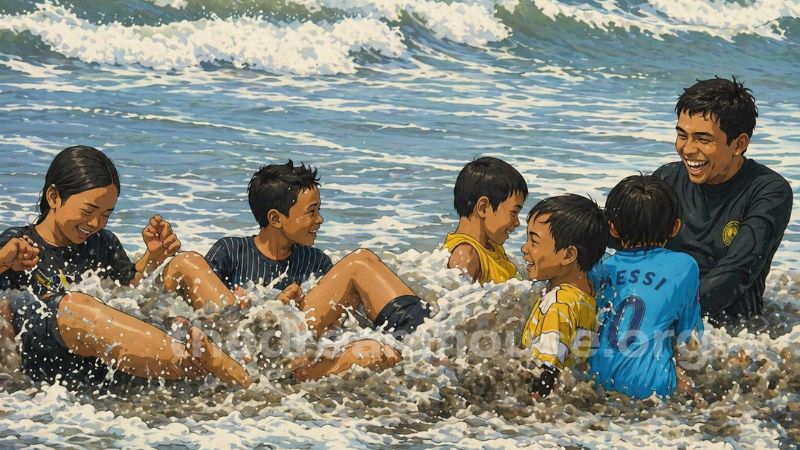
- A child who can laugh freely, without carrying burdens too heavy for their age
Child rights are about the daily experiences that shape who children are—and who they will become.
The Four Basic Rights of Children
In general, child rights can be understood through four main categories:
1. Survival Rights
These rights include basic needs such as food, clean water, shelter, and access to healthcare. Without the fulfillment of these rights, children lack the foundation necessary to sustain life.
However, survival is not merely about staying alive—it is about living in conditions that are worthy of human dignity.
2. Development Rights
These rights encompass education, stimulation, affection, and opportunities for emotional, social, and intellectual growth.
Many children in crisis lose access to these rights. They may continue to exist physically, but they are not truly growing.
This is where intervention becomes essential—creating safe spaces, meaningful experiences, and restorative relationships that allow children to develop fully.
3. Protection Rights
Children have the right to be protected from violence, exploitation, neglect, and all forms of harmful treatment.
Protection is not only about preventing harm, but also about ensuring that responsive systems are in place when children are at risk.
4. Participation Rights
Every child has the right to be heard, to express their opinions, and to be involved in decisions that affect their lives.
This is perhaps the most frequently overlooked right. Many children grow up in environments where their voices are not considered important.
Yet participation is the foundation of self-confidence and identity formation.
When Child Rights Are Not Fulfilled
The reality on the ground shows that not all children have equal access to their rights.
Children living in crisis—whether due to poverty, violence, or family dysfunction—often experience multiple layers of rights violations.
They do not lose just one right, but several at the same time.
For example, a child who experiences violence at home does not only lose their right to protection. They also lose their sense of safety, which affects their emotional development and their ability to learn.
This is why partial approaches are not enough.
A Holistic Approach: Restoring What Has Been Lost
Fulfilling child rights requires a comprehensive approach—one that sees children as whole individuals, not merely as recipients of aid.
A holistic approach means:
- Integrating protection, recovery, and development
- Involving families and surrounding communities
- Building safe and sustainable relationships
This approach is reflected in various practices carried out by Dreamhouse, from crisis center services to family reintegration programs.
The Role of Family and Environment
No intervention can truly succeed without involving the family.
The family is the first space where child rights should be fulfilled. However, when families are unable to perform this role, the environment—communities, schools, and social institutions—must step in as a support system.
Child protection is not the responsibility of a single party. It is a shared responsibility.
Child Rights and the Hope for the Future
When child rights are fulfilled, the impact extends far beyond the individual child.
They will grow into individuals who:
- Possess self-confidence
- Are capable of building healthy relationships
- Contribute positively to society
In other words, fulfilling child rights today is an investment in a better future.
Reflection: From Awareness to Action
Understanding child rights is only the first step. What matters far more is how we respond to that understanding.
Each of us has a role:
- As parents
- As educators
- As members of society
Even through small actions—listening, valuing, protecting—we are participating in the fulfillment of child rights.
Closing
Child rights are not merely discourse. They are the foundation of a dignified life.
And behind every policy, every program, and every intervention, there is one shared goal: to ensure that every child has the opportunity to live, grow, be protected, and be heard.
Because ultimately, the future of our world is deeply shaped by how we treat children today.